Creating a virtual human pour sa marque est un processus en 8 étapes qui combine design de personnage, modélisation 3D ou génération IA, animation, voice design et intégration sur les supports de communication. En 2026, le processus est accessible aux marques de toutes tailles - à condition d'avoir un DA qui supervise.
Before designing anything: why does this virtual human exist? Brand ambassador, spokesperson, service avatar, influencer, narrative character? The role determines the style, level of realism, channels and budget.
A virtual human without personality is a 3D mannequin. At Nexia, our art director runs a 2 to 3-hour workshop with the client: name, age, fictional backstory, character traits, tone of voice, posture, dress style, cultural references. The deliverable is a character sheet - just like in cinema.
Hundreds of face, style and attitude variations are generated by AI (Midjourney, Stable Diffusion, specialised models). The art director selects 5 to 8 directions. The client approves 2 to 3 for development.
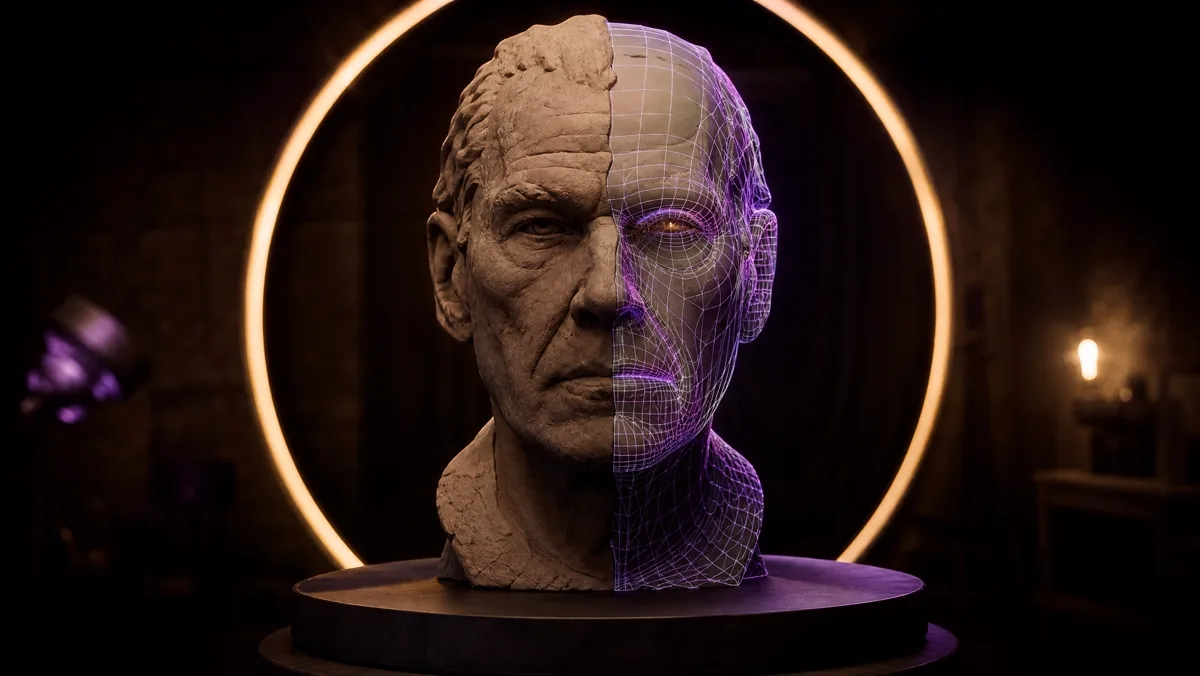
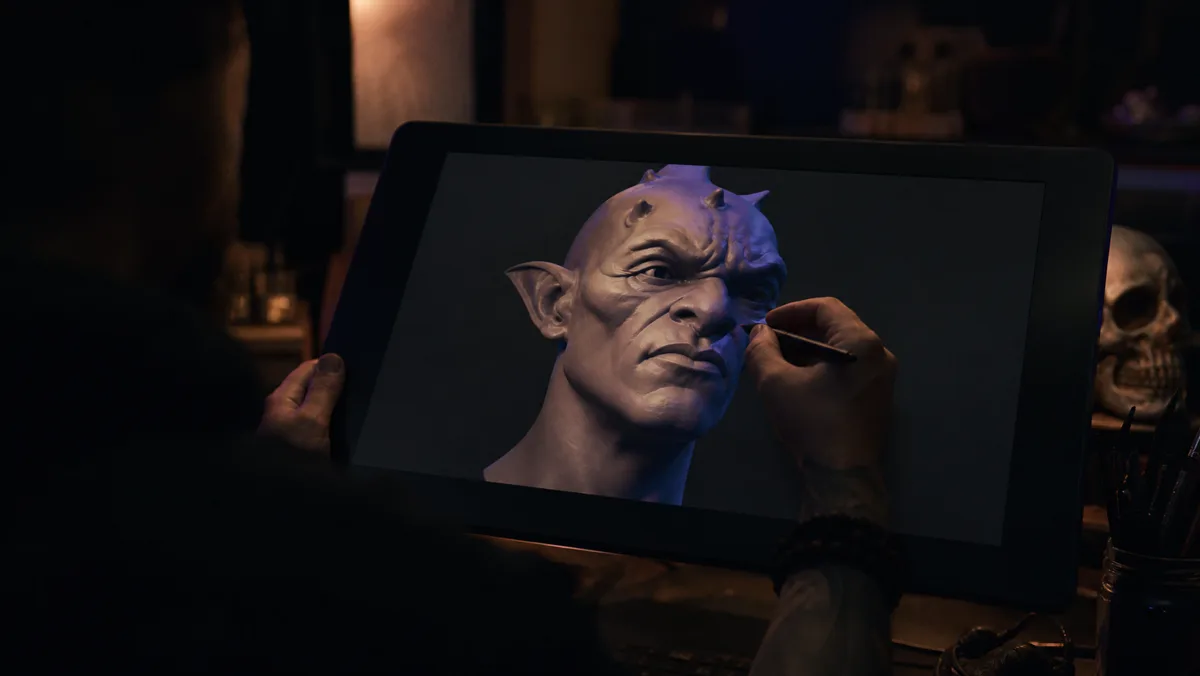
Two possible paths. The 3D path: Nicolas Dalmas models the character in 3D (Blender, ZBrush) for total control over expressions, angles and animation. More costly, more flexible, better for long-term use. The AI path: an AI generation pipeline produces consistent photorealistic visuals of the character. Less costly, faster, sufficient for social media and video use.
The character comes to life. AI-augmented motion capture for natural movements. Lip-sync for speech. Facial expressions for emotions. The level of animation depends on the channel: pre-rendered video (high quality) or real-time (interactivity).
The voice is as important as the face. Voice synthesis calibrated to the character's personality - tone, rhythm, accent, register. Multilingual if needed. 2026 tools (ElevenLabs, etc.) produce voices indistinguishable from human ones.
The virtual human is deployed on chosen channels. Website (dedicated section or contextual interaction), social media (posts, stories, simulated lives), video (pre-renders for campaigns), events (screens, projection, AR), customer service (connected to an LLM for conversational interactions).
A guidelines document defines how to use the virtual human: approved poses, expressions, usage contexts, do/don't. The virtual human is a brand asset - it must be managed with the same rigour as a logo.
A virtual human without personality is a 3D mannequin. The role determines the style, level of realism, channels and budget.
The virtual human is a brand asset - it must be managed with the same rigour as a logo.
Basic virtual human (AI visuals + voice + guidelines): from €5,000. Complete virtual human (3D + animation + voice + web integration): from €10,000. Annual maintenance (new animations, new content): 20 to 40% of the initial budget.